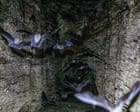
The more than 100 bat species living in the Mozambican reserve’s labyrinth of caves play a key role in maintaining a fragile ecosysytem that benefits wildlife and people
• Words and photographs by Kang-Chun Cheng
After wriggling gingerly into a damp, cool cave, Raúl da Silva Armando Chomela waits for his eyes to adjust. Donning latex gloves, a helmet fitted with a headlamp, and a mask to protect his lungs from fine particles and bacteria, the molecular biologist from the Mozambican port city of Beira gazes into the shadowy recesses for signs of bats.
He has spent two years in these claustrophobic spaces studying the winged mammals and their excrement. “Guano is far more than just bat droppings,” he says. “If I had to describe it in one word, I’d say ‘ecosystem’.”
Continue reading...