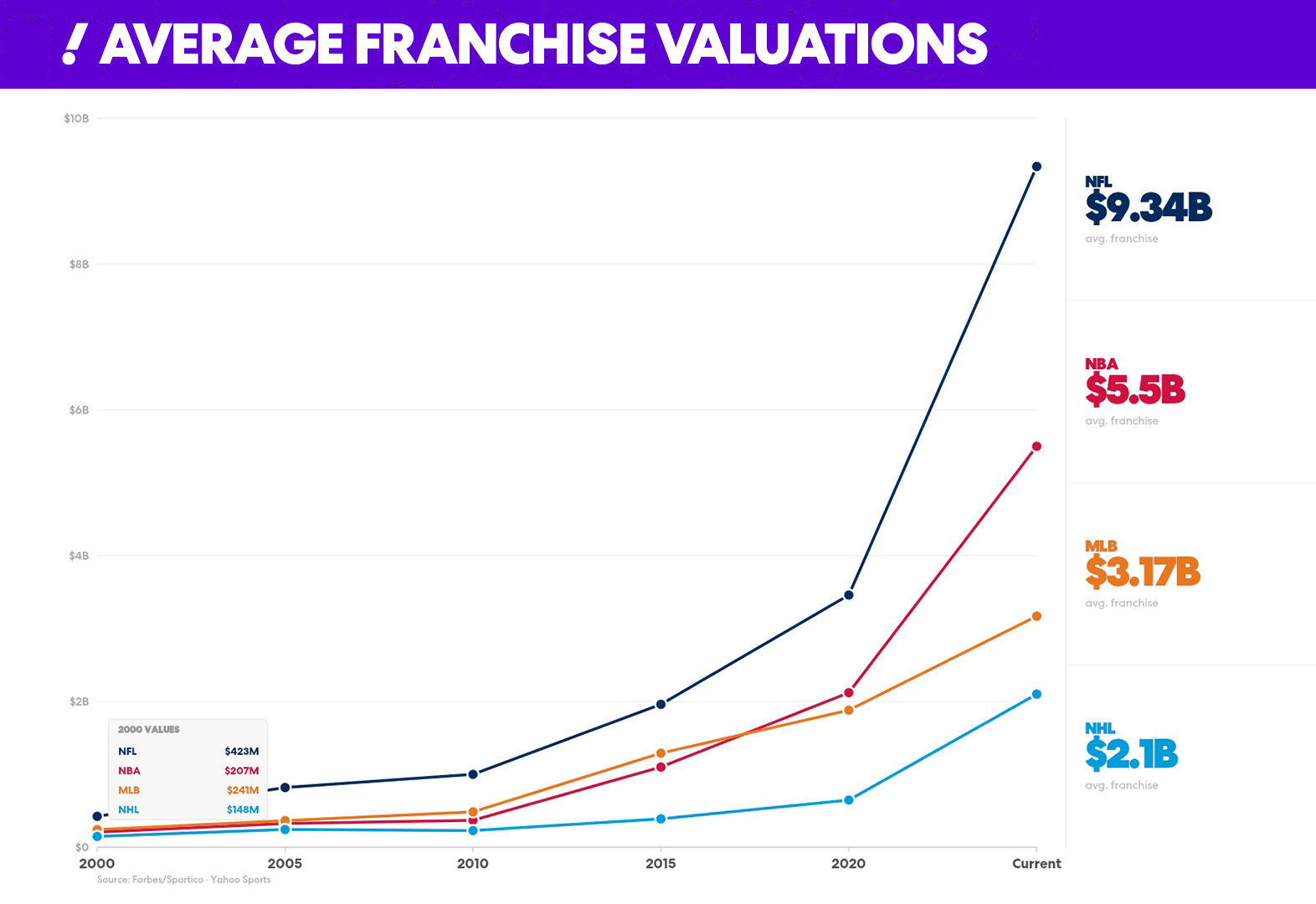
In spring of 1979, Jerry Buss received the phone call he had been waiting for. Jack Kent Cooke was ready to sell off his Southern California sports empire. Cooke had just gone through an acrimonious split with his wife of 40-plus years. He needed an influx of quick cash to help pay for a divorce settlement that would ultimately cost a staggering $41 million. Buss began cozying up to Cooke as soon as he learned the media and real estate tycoon might be amenable to making a deal. For more than a year, Buss periodically visited Cooke in Las Vegas to talk basketball, build rapport and discuss the framework of a potential sale. By late May, a Monopoly-like deal came together that The New York Times labeled "the largest single financial transaction in the history of professional sports" — and also the most "confusing" and "complicated." Cooke demanded that Buss acquire New York's iconic Chrysler Building for him, as well as properties in several other states. In return, Cooke sold Buss the Forum for $33.5 million, the Los Angeles Lakers for $16 million, the Los Angeles Kings for $8 million and his sprawling 13,000-acre ranch in the Sierras for $10 million. "When it was all done, there were enough escrow papers to fill a library and enough lawyers to fill the Forum," Jeanie Buss recalled in her 2010 memoir, "Laker Girl." What seemed like an exorbitant price at the time now looks like a bargain decades later. The value of every single team in all four major American sports has increased exponentially at an average pace far exceeding both inflation and the S&P 500. In June 2025, the Buss family agreed to sell majority ownership of the Lakers to Guggenheim Partners CEO Mark Walter for a franchise valuation of approximately $10 billion. Fourteen months later, Walter sold his controlling stake in the Lakers to Bob Iger and Joshua Kushner at a $12.5 billion valuation amidst a liquidity crunch caused by a federal investigation into his insurance businesses. The Lakers are a prized asset because of their iconic global brand and massive market size, but they aren't the only sought-after franchise in professional sports. Sportico last week valued the Dallas Cowboys at $15.5 billion and eight other NFL franchises at more than $10 billion. The Golden State Warriors are worth more than $11 billion, according to both Forbes and Sportico. Same with the New York Knicks, per JP Morgan. Even a forlorn franchise like the Athletics has soared in value despite currently playing home games in a Triple-A stadium and having an owner notorious for investing as little as possible in the on-field product. A franchise that sold for $180 million in 2005 is now worth $2 billion, according to Forbes. (Grant Thomas/Yahoo Sports illustration)
"Sports is beginning to be viewed by the ultra wealthy as a great hedge investment because it's not correlated to the stock market," said Sal Galatioto, whose firm, Galatioto Sports Partners, is often the first call for billionaires interested in buying a stake in a team or ownership groups looking to sell. "You basically have a fixed number of teams in every league and demand is going through the roof. The only thing I remember from all those dopey economic courses I took is that when supply is fixed and demand goes up, price goes up. That's what's happening." Prices have skyrocketed so high that merely having a billion-dollar net worth often isn't enough to become the principal owner of a professional sports team. The new generation of owners will need even larger balance sheets to afford the purchase price of the team, to maintain liquidity to bankroll expenses and to avoid concentrating wealth in a single asset. To become controlling owner of an NFL team, a buyer must pay for at least a 30% stake in the franchise while limiting the debt used for the purchase to less than $1 billion. Major League Baseball and the NBA require controlling owners to own at least 15% of the franchise equity, while the NHL doesn't have a rigid minimum. "If you want to buy a hockey team, you probably have to be worth two or $3 billion, depending on how much you want to put in," Galatioto said. "If you wanted to buy controlling interest in an NFL team, you probably have to be worth six or $7 billion because you're going to have to come up with at least $3 billion in liquidity." Scarcity has always created intense competition among potential buyers whenever a franchise goes on the market, but lately other factors have also helped drive up the price. The revenue generated through ballooning media rights deals is the biggest one. Sports are the last remaining TV content that large audiences typically watch all at once, allowing networks to charge sky-high prices for commercials and sell subscriber packages. Joel R. Freedman, founder of Eclipse Private Wealth Management, cautioned that owning a piece of a team is "illiquid" and "not without risk" but said it makes sense for certain investors. Freedman described sports investment as an attractive option for individuals seeking to insulate themselves from the stock market's ebbs and flows. "Most people invest their money in stocks and bonds," Freedman said, "and as a financial advisor, I'm recommending to people to invest in alternatives that are uncorrelated." (Grant Thomas/Yahoo Sports illustration)
There aren't many individuals wealthy enough to pay for a professional sports team on their own, so leagues have also increased the potential buyer pool by relaxing their rules regarding private equity investment. Owners seeking to gain liquidity without ceding control have sold minority stakes to PE investors. Private equity allows a wider range of people to participate in sports ownership, but Ron Diamond, founder of Diamond Wealth Strategies, warns there's potential downside. Private equity firms operate on a shorter timeline than traditional owners, Diamond said, often seeking to sell within five to six years to satisfy shareholders. The pressure for quick returns may lead to decisions that prioritize profits over competing for championships or improving the fan experience. "If you're a fan, you don't want private equity involved with your favorite team," Diamond said. "Private equity is by definition a transactional business. There's a shot clock that family offices don't deal with." Those concerns echo what former Dallas Mavericks owner Mark Cuban has said about the evolution of the NBA ownership landscape. When Cuban bought a 91% ownership stake in the Mavericks more than a quarter century ago, his motivation was the "emotional connection" he felt to the team. "The best part was I could go out on the court and shoot before the game and when there was a buzzer beater, I could run out onto the court and not get arrested," Cuban recently told Front Office Sports. By the time Cuban sold his majority stake in the Mavericks in 2023, he says team ownership became "a different beast." Cuban felt the leaguewide emphasis had shifted away from winning or fan experience. "We got to the point where franchises got so expensive, there was almost always some level of private equity involvement," Cuban told Front Office Sports. "When you're having to bring in money, you're obligated to those people. And when you have obligations because you're raising money, it's not just about winning. All those people you brought in, particularly the private equity guys, they don't want to write checks for capital costs because you went into the luxury tax or you were above the second apron. That's not why they're there. They're not running onto the court for a buzzer beater." As professional sports keeps attracting a broader class of capital, including private equity firms, family offices and institutional investors, the lingering question is how much more team valuations can continue to increase. Will growth stagnate? Or will sports continue to outpace most other forms of investment? Joe Lum, managing director at MAI Capital Management, doesn't expect franchise valuations to plateau anytime soon. "The valuations will continue to increase because of demand and the desire for consumers to be able to put money towards something that they care about," Lum said.
Galatioto agrees, in part because he envisions leagues putting their thumb on the scale to inflate valuations. "Look, I think valuations are going to continue to go up," Galatioto said. "Are they going to continue to go up at this speed? That's hard to say. Once prices get higher and higher and higher and higher, the number of people who can actually invest is going to get smaller and smaller and smaller. "But on the other hand, all the limitations are artificial. The leagues determine how much you need to be the controlling partner, right? They can change that. How much debt you can put on teams, they can change that. How much private equity can put in, they can change that. It's not like a constitutional amendment. It's a bunch of people sitting around the table saying, "Hey, our valuations aren't going up as fast as they should. Maybe we should change something."